


Diamond shapes are categorized according to overall cut and the positioning and shapes of the facets. A facet is defined as flat, smooth surfaces of the diamond that are placed at different angles to allow for the reflection of light. This reflection results in the desirable visual effects of brilliance in the diamond.
1) Modified brilliants are closest to a round brilliant in terms of the number of facets and manner in which these facets are arranged, thus giving it the most fire and brilliance. Modified brilliants include marquise, heart, trillion, oval, pear shapes, as well as certain cushion diamonds.
2) Step cuts are either square or rectangular with the facets positioned parallel to the girdle. These stones often have their sharp corners -which can be points of weakness in a diamond- cut to prevent any chipping or fracturing. Because these diamonds are relatively shallow in depth, step cuts lack the brilliance and fire of its counterparts. Instead they accentuate a diamond’s clarity, color, and shine. Emerald cut diamonds are the most recognized step cuts followed by Asscher, baguette and trillions.
3) Mixed cuts attempt to combine and utilize the most desirable characteristics of the brilliant and step cuts. They offer the weight preservation in the cutting process afforded to step cuts, as well as the visual beauty and fire reserved for brilliant cuts. The most prevalent mixed cut diamonds are the princess and radiant cuts.
Now we will take it a step further and speak in depth about each diamond shape:
 Round brilliants are
the most popular and sparkly of all cuts because of its intricate
faceting and symmetrical 360 degree shape. The manner in which light
reflects through the bottom of the diamond and bounces back through
the top enhances the brilliance in these diamonds. Because of this, it
is the most readily available diamond cut in jewelry stores across the
world. The desirable aesthetic attributes of round brilliants, along
with the fact that it requires the most time and amount of rough
diamond to produce, are a few reasons why round brilliants are also
the most expensive of all diamond shapes. In addition, the faceting in
round brilliants helps mask imperfections and increase the appearance
of color (in a good way). There is no question that if you love the
“bling” effect, the round brilliant is for you.
Round brilliants are
the most popular and sparkly of all cuts because of its intricate
faceting and symmetrical 360 degree shape. The manner in which light
reflects through the bottom of the diamond and bounces back through
the top enhances the brilliance in these diamonds. Because of this, it
is the most readily available diamond cut in jewelry stores across the
world. The desirable aesthetic attributes of round brilliants, along
with the fact that it requires the most time and amount of rough
diamond to produce, are a few reasons why round brilliants are also
the most expensive of all diamond shapes. In addition, the faceting in
round brilliants helps mask imperfections and increase the appearance
of color (in a good way). There is no question that if you love the
“bling” effect, the round brilliant is for you.
Round brilliant diamonds are the most common shape for both jewelry and engagement rings. The versatility and brilliance of these diamonds makes them go well in most any setting.
 Princess cuts are
generally thought of as the second most popular diamond shape, with
its creation tracing back to the 1960’s. Typically square in
shape with sharp corners, princess cuts separate themselves from other
square shaped diamonds because its faceting is designed to maximize
brilliance. These diamonds should be carefully set in v-shaped four
prong setting to protect the corners from chipping.
Princess cuts are
generally thought of as the second most popular diamond shape, with
its creation tracing back to the 1960’s. Typically square in
shape with sharp corners, princess cuts separate themselves from other
square shaped diamonds because its faceting is designed to maximize
brilliance. These diamonds should be carefully set in v-shaped four
prong setting to protect the corners from chipping.
When it comes to engagement rings, princess cut center diamonds look great in solitaire settings or with two smaller princess cut side-stones.
Princess cuts are also popular for jewelry use because they manage to closely simulate the brilliance and sparkle of round brilliants but in a different shape which lends itself to different jewelry designs.
 The emerald cut is
thought of as one of the most classic diamond shapes, with its origins
tracing back to over 500 years ago, receiving its name from its most
common application to the green emerald gemstone. It was made popular
during the Art Deco period of the early 1900’s in antique style
settings and has noticed a resurgence of late to those looking for
vintage inspired engagement rings. This step cut diamond, usually
rectangular in shape with clipped corners, is relatively shallow and
has an open table that allows the observer to look clearly into the
diamond. For these reasons, the emerald cut diamonds lack the fire and
brilliance of other shapes while the clarity is accentuated. However,
the elongated shape does allow for larger flashes of sparkle when rays
of light reflect through them.
The emerald cut is
thought of as one of the most classic diamond shapes, with its origins
tracing back to over 500 years ago, receiving its name from its most
common application to the green emerald gemstone. It was made popular
during the Art Deco period of the early 1900’s in antique style
settings and has noticed a resurgence of late to those looking for
vintage inspired engagement rings. This step cut diamond, usually
rectangular in shape with clipped corners, is relatively shallow and
has an open table that allows the observer to look clearly into the
diamond. For these reasons, the emerald cut diamonds lack the fire and
brilliance of other shapes while the clarity is accentuated. However,
the elongated shape does allow for larger flashes of sparkle when rays
of light reflect through them.
Classic in nature, emerald cut diamonds appear very smooth and elegant, going well in classic solitaire or three stone engagement rings. Emerald cut diamonds are also popular in eternity bands because of its complete look and the manner in which these diamonds can be set consecutively without any airspace in between them.
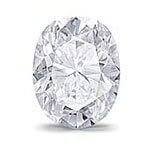 Oval shape diamonds
came about in the 1960’s, and are basically an elliptical
adaptation of the round brilliant. These diamonds, because of their
inherent shape, help to elongate the fingers of its owner. These
diamonds give off similar brilliance to the round shape but does so
with a unique shape. Because of the manner in which the weight is
dispersed in these diamonds, they will usually appear larger in size
than a round cut of the same carat weight. The pricing on these type
of diamonds are relatively high due to the limited supply available.
Oval shape diamonds
came about in the 1960’s, and are basically an elliptical
adaptation of the round brilliant. These diamonds, because of their
inherent shape, help to elongate the fingers of its owner. These
diamonds give off similar brilliance to the round shape but does so
with a unique shape. Because of the manner in which the weight is
dispersed in these diamonds, they will usually appear larger in size
than a round cut of the same carat weight. The pricing on these type
of diamonds are relatively high due to the limited supply available.
For solitaire engagement ring settings, they usually require six prongs to ensure maximum stability. Oval diamonds also look great in the very popular halo settings. Because of their elongated appearance they show up well in jewelry creations, making great pieces such as drop earrings or pendants
 Radiant cut diamonds, also referred to as square modified brilliants,
diamonds were created 30 years ago with the purpose of introducing the
brilliance that was lacking in square or rectangular shaped diamonds.
They are like the emerald cut in that these diamond are often
rectangular in shape with cropped corners, but can be square as well.
The difference in these two shapes is obvious- the radiant is faceted
like a brilliant on both the crown and pavilion which makes it more
brilliant and more forgiving to imperfections than its step cut
counterparts. This criss-cross faceting, which is highly visible from
a face up view, makes this diamond shape easily recognizable. It is a
popular option for those who love the shape of the emerald or asscher
cut diamonds but desire the brilliance and sparkle associated with the
round.
Radiant cut diamonds, also referred to as square modified brilliants,
diamonds were created 30 years ago with the purpose of introducing the
brilliance that was lacking in square or rectangular shaped diamonds.
They are like the emerald cut in that these diamond are often
rectangular in shape with cropped corners, but can be square as well.
The difference in these two shapes is obvious- the radiant is faceted
like a brilliant on both the crown and pavilion which makes it more
brilliant and more forgiving to imperfections than its step cut
counterparts. This criss-cross faceting, which is highly visible from
a face up view, makes this diamond shape easily recognizable. It is a
popular option for those who love the shape of the emerald or asscher
cut diamonds but desire the brilliance and sparkle associated with the
round.
Radiant cut diamonds are more commonly found in engagement rings than with any other type of jewelry. They go really well in three stone settings with trillions, smaller radiants, and bullet shaped side stones. Because these side diamonds fit snug against the center radiant, the appearance of these three diamonds together creates one large, continuous sparkling look. Radiant cut diamonds are particularly popular for fancy-colored diamond engagement rings because its shape, proportions and faceting help deepen the overall color.
 Asscher cut diamonds
were developed at the turn of the 20th century and are named after its
creators, the Asscher brothers. Diamond grading laboratories also
refer to this diamond as a square emerald. The overall step cut
faceting and shape are similar to the emerald cut, but has noticeably
steep cut corners that make it resemble an octagon. The “Hall of
Mirrors” optical effect in Asscher cut diamonds created by the
additional step facets, helps create more internal light refraction
and thus more sparkle and fire than its emerald cut counterpart.
Because of these additional step facets these stones are deeper,
making them appear smaller face up than diamond cuts of the same size.
As is the case with other step cuts, clarity and color are more
noticeable in these diamonds which is something that should be taken
into consideration.
Asscher cut diamonds
were developed at the turn of the 20th century and are named after its
creators, the Asscher brothers. Diamond grading laboratories also
refer to this diamond as a square emerald. The overall step cut
faceting and shape are similar to the emerald cut, but has noticeably
steep cut corners that make it resemble an octagon. The “Hall of
Mirrors” optical effect in Asscher cut diamonds created by the
additional step facets, helps create more internal light refraction
and thus more sparkle and fire than its emerald cut counterpart.
Because of these additional step facets these stones are deeper,
making them appear smaller face up than diamond cuts of the same size.
As is the case with other step cuts, clarity and color are more
noticeable in these diamonds which is something that should be taken
into consideration.
Asscher cut diamonds are a favorite of Art Deco style of jewelry. In engagement rings, these diamonds give off the appeal of classic elegance. Although they look beautiful in most any type of setting, prong settings are great because they allow for maximum amount of light to enter these stones. Asscher cut diamonds are also widely used in diamond eternity bands.
 Marquise cut diamonds have a long and storied history dating back to the
early 1400’s and King Louis XV of France. This fancy shaped,
step cut diamond is also referred to as a Navette cut and can be
described as being oval with pointed ends. Marquise shape diamonds are
less expensive and not as brilliant as round or ovals but is popular
due to its slim, graceful appearance, highlighted by its pointed tips.
This long and slender appearance assists in elongating the fingers of
its wearer. These diamonds also appear to be larger than their actual
carat weight making them a great option for those looking for a
distinguished alternative to the more common round and oval diamonds.
Marquise cut diamonds have a long and storied history dating back to the
early 1400’s and King Louis XV of France. This fancy shaped,
step cut diamond is also referred to as a Navette cut and can be
described as being oval with pointed ends. Marquise shape diamonds are
less expensive and not as brilliant as round or ovals but is popular
due to its slim, graceful appearance, highlighted by its pointed tips.
This long and slender appearance assists in elongating the fingers of
its wearer. These diamonds also appear to be larger than their actual
carat weight making them a great option for those looking for a
distinguished alternative to the more common round and oval diamonds.
This classic diamond shape shows well in a variety of engagement ring settings. It is important that that the tips of the marquise diamond are not left exposed in order to prevent any chipping or damage to these vulnerable points. Prong, bezel, or a diamond halo settings are some of the most popular styles for these engagement rings.
Marquise diamonds are also commonly found in fashion jewelry creations. The distinguished shape can add an extra dimension to any design.
 Pear shaped diamonds,
also referred to as briolette or teardrops, have no table or cutlet
and are instead completely covered by facets. The shape of these
diamonds can be described as being a hybrid between an oval and
marquise shape. Achieving the proper symmetry in pear shapes is
crucial because any unevenness will not look pleasant and is highly
visible to even the most casual of viewers. It is also widely
understood that a pear shaped diamond should be seen in person to make
sure all the symmetry, shoulders and points are correctly built.
However, assuming all these factors are in order, the overall length
to width ratio is usually a matter of personal taste. The longer,
slimmer pear shapes are usually reserved for fashion jewelry
creations, while the more balanced ones are a preference for
engagement rings.
Pear shaped diamonds,
also referred to as briolette or teardrops, have no table or cutlet
and are instead completely covered by facets. The shape of these
diamonds can be described as being a hybrid between an oval and
marquise shape. Achieving the proper symmetry in pear shapes is
crucial because any unevenness will not look pleasant and is highly
visible to even the most casual of viewers. It is also widely
understood that a pear shaped diamond should be seen in person to make
sure all the symmetry, shoulders and points are correctly built.
However, assuming all these factors are in order, the overall length
to width ratio is usually a matter of personal taste. The longer,
slimmer pear shapes are usually reserved for fashion jewelry
creations, while the more balanced ones are a preference for
engagement rings.
As brides have begun to gravitate towards the unconventional, sacrificing ordinary for originality, the pear shaped engagement ring has seen a significant resurgence of late. As a center-stone, these diamonds look great in a three stone grouping with smaller pear shapes flowing horizontally from each side. They also look beautiful in the contemporary halo setting, or in a solitaire prong or bezel setting that protects the point. It is not a hard fast rule, but pear shaped engagement rings are generally worn with the pointed end facing away from the hand.
In the world of fashion jewelry pear shapes are amongst the most versatile and widely used behind only rounds, princess, and emerald cuts. Pear shapes make great drop earrings and pendants because of their elongated look that shows well against the skin. These diamonds also go well in more elaborate designs such as diamond necklaces fashioned with a series of suspended pear shaped drops.
 Cushion cut diamonds
derive its name from its pillow like, fluffy appearance with rounded
corners and a square shape. These diamonds lack the brilliance of a
round stone, but they make up for that in its soft design and delicate
charm. Cushion cut diamonds were extremely popular during the late
1800’s and into the early 1900’s, however, they have seen
a sharp increase in their popularity of late, arguably surpassing all
diamond shapes except the round brilliant. These diamonds are broken
down into two different types: the cushion brilliant and the cushion
modified brilliant, with the latter having an extra row of faceting
below its girdle to help increase sparkle. All cushions vary greatly
in terms of dimension from rectangular to square, with the classic
“pillow” shape having a length to width ratio of 1.10 to
1.20. Cushion cut diamonds offer a softer visual appearance to square
or rectangular shaped diamonds. For this purpose, they have become an
increasingly popular choice for engagement rings as emerald and
princess cuts have taken a backseat.
Cushion cut diamonds
derive its name from its pillow like, fluffy appearance with rounded
corners and a square shape. These diamonds lack the brilliance of a
round stone, but they make up for that in its soft design and delicate
charm. Cushion cut diamonds were extremely popular during the late
1800’s and into the early 1900’s, however, they have seen
a sharp increase in their popularity of late, arguably surpassing all
diamond shapes except the round brilliant. These diamonds are broken
down into two different types: the cushion brilliant and the cushion
modified brilliant, with the latter having an extra row of faceting
below its girdle to help increase sparkle. All cushions vary greatly
in terms of dimension from rectangular to square, with the classic
“pillow” shape having a length to width ratio of 1.10 to
1.20. Cushion cut diamonds offer a softer visual appearance to square
or rectangular shaped diamonds. For this purpose, they have become an
increasingly popular choice for engagement rings as emerald and
princess cuts have taken a backseat.
For engagement rings, cushion diamonds work well in halo settings which accentuate its shape and size. Because of their soft edges, cushion center diamonds also work well with trapezoid side stones which create the illusion of one large diamond. These diamonds are also popular for eternity bands. They are the shape of choice for fancy colored diamonds because the faceting and shape evenly disperse the color throughout the stone.
 Heart (shaped modified brilliant) is considered to be the most romantic of all shapes for obvious
reasons. This fancy diamond is really a pear shape with a cleft at the
top, and has 59 facets which allows for inclusions to be more readily
hidden. These diamonds are naturally heavy set and must be cut with
extreme accuracy to ensure maximum brilliance. More so than with other
cuts, hearts shaped diamonds should always be seen in person to make
sure the proportions and overall shape are well designed.
Heart (shaped modified brilliant) is considered to be the most romantic of all shapes for obvious
reasons. This fancy diamond is really a pear shape with a cleft at the
top, and has 59 facets which allows for inclusions to be more readily
hidden. These diamonds are naturally heavy set and must be cut with
extreme accuracy to ensure maximum brilliance. More so than with other
cuts, hearts shaped diamonds should always be seen in person to make
sure the proportions and overall shape are well designed.
Heart shaped diamonds are ideal for a sentimental piece of jewelry to express your love to that special someone. They should normally be placed in a five prong setting- two on the sides, two at the top of the lobes and one at the point. Lauren B Jewelry carries an exclusive heart shaped engagement ring design featuring a halo of pink diamonds to give it that extra touch of love.
These diamonds usually come in sizes of less than one carat because they are strictly used as side-stones for engagement rings, or set together to form a jewelry piece. For engagement rings, baguettes have long been used as accents to a larger center stone because they help amplify the brilliance and fire of the entire piece. Tapered baguettes, a variation on the normal rectangular shape, are also highly regarded for the illusion it helps to create of a larger center stone.
Also in the bridal category, wedding bands feature baguettes as well because of their relatively low price compared to emerald cuts, and the ability to line them up side by side to create a unified look without any airspace between.